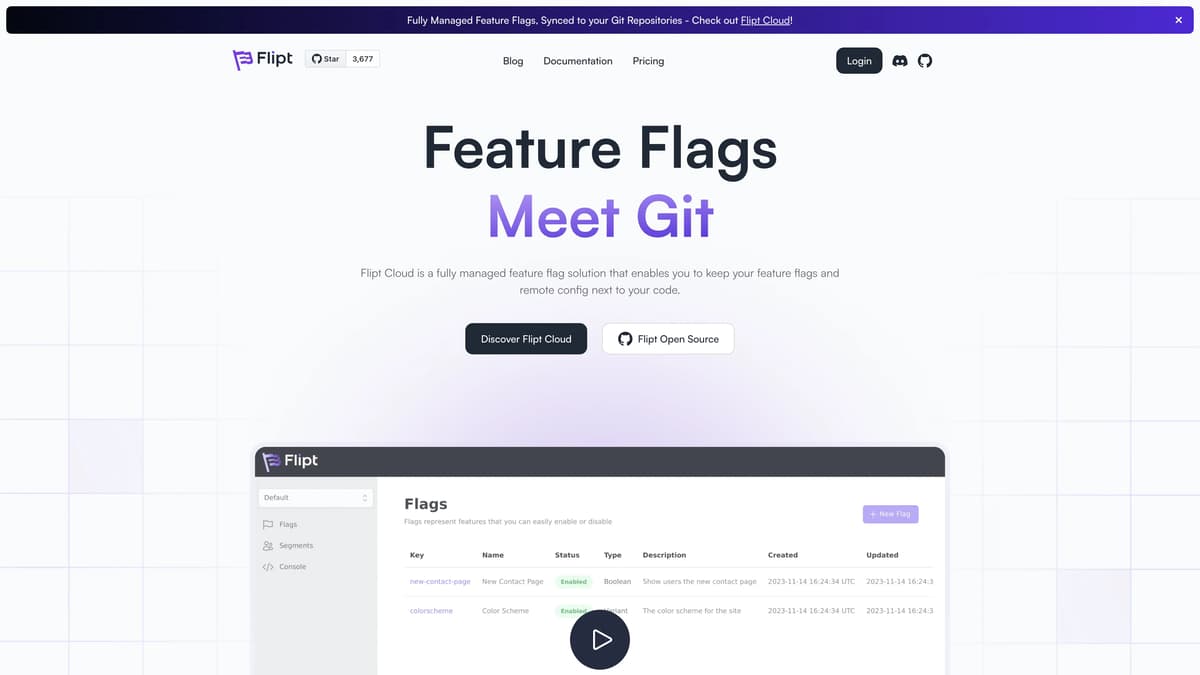
Flipt Cloud Introduction
Flipt Cloud revolutionizes feature management by integrating feature flags seamlessly with your GitHub repositories. This fully managed service allows developers to treat feature flags as code, enabling instant rollbacks, precise testing, and quick iterations. Imagine flipping a switch to turn a feature on or off without deploying new code; that's the power of Flipt. With built-in user management, role-based access control, and Git-backed storage, it offers unparalleled control and transparency. The service is designed to scale effortlessly, relieving teams from the burden of infrastructure management. It's like having the efficiency of Git with the flexibility of feature flags, all in one place.
Flipt Cloud Key Features
Git-Powered Feature Flags
Store feature flag configurations directly in your GitHub repositories. This ensures that flag management is tightly integrated with your existing workflows, providing seamless version control and instant rollbacks.
Fully Managed Service
Enjoy effortless scalability and maintenance with Flipt Cloud. Focus on developing and deploying new features without worrying about underlying infrastructure or server management.
Synchronized Environments
Flipt Cloud synchronizes your development, CI, and production environments. This synchronization streamlines releases and allows for easier testing and bug reproduction.
Comprehensive User Management
Manage access and permissions effortlessly through built-in authentication, social logins, and SSO. Define custom roles and permissions, or use predefined roles for quick setup.
Secure and Auditable
Keep a complete audit trail using Git commits to track changes. This makes it easy to see who made modifications, ensuring transparency and compliance across your team.
Flipt Cloud Use Cases
Developer Collaboration: Teams of developers use Flipt Cloud to manage feature flags directly in their GitHub repositories. This ensures that everyone is working with the most up-to-date configurations, leading to fewer errors and a smoother workflow.
Continuous Delivery: By integrating Flipt Cloud’s feature flags in their CI/CD pipelines, DevOps teams can enable or disable features in production instantly. This makes it easier to roll out new features gradually and rollback quickly if something goes wrong.
User Segmentation: Product managers use Flipt Cloud to target specific user segments with new features by configuring feature flags directly from their GitHub repositories. This allows them to gather feedback and iterate quickly based on real user data.
Audit and Compliance: Companies use Flipt Cloud to ensure all changes to feature flags are logged in Git commits. This provides an audit trail that helps with compliance requirements and makes it easier to track who made changes and why.
Role-Based Access Control: Teams leverage Flipt Cloud’s built-in RBAC system to define custom roles and permissions, ensuring that the right people have access to the right features. This helps maintain security and simplifies user management.
Flipt Cloud User Guides
Step 1: Sign up for Flipt Cloud and log in using your GitHub account.
Step 2: Connect your GitHub repository to Flipt Cloud to store feature flags with your code.
Step 3: Create a new feature flag in the Flipt Cloud UI and define its parameters.
Step 4: Integrate the Flipt SDK into your application code to evaluate and manage feature flags.
Step 5: Use Git to review, version control, and roll back feature flags as needed.
Flipt Cloud Frequently Asked Questions
What is Flipt Cloud?
How does Flipt Cloud handle feature flag configurations?
Can I self-host Flipt?
What makes Flipt Cloud different from the Open Source version?
How does Flipt Cloud integrate with my existing tools?
What user management features does Flipt Cloud offer?
Is Flipt Cloud suitable for enterprise-level applications?
How does Flipt Cloud ensure data security?
Can non-technical users use Flipt Cloud effectively?
What makes Flipt Cloud cost-effective compared to competitors?
Flipt Cloud alternatives
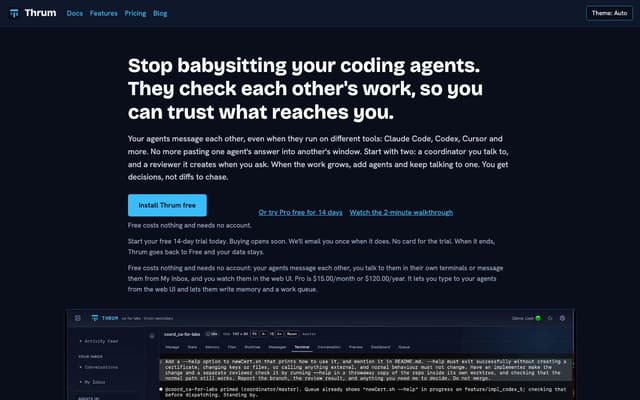
Thrum
A local tool that lets coding agents on Claude Code, Codex, Cursor and more message each other, with a coordinator that assigns, reviews and merges their work.
AI Developer Tools · Freemium, from $15/mo

Timon
A free desktop app that runs Claude Code, Codex, Grok, Copilot and other coding agents side by side, with a Kanban pipeline that codes, reviews and merges.
AI Code Assistant · Free
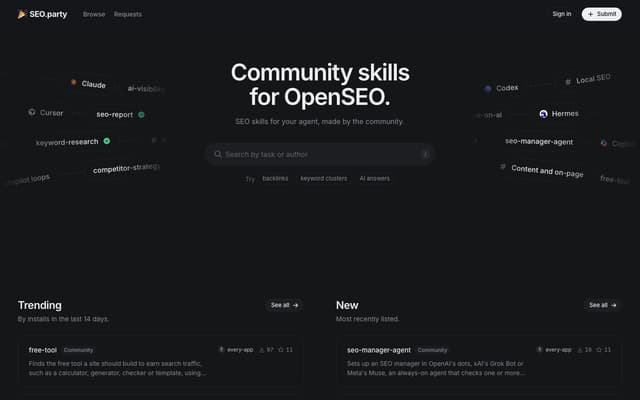
SEO.party
A free library of community SEO skills for coding agents such as Claude Code, Codex and Cursor, all built on OpenSEO's data tools.
AI SEO Assistant · Free
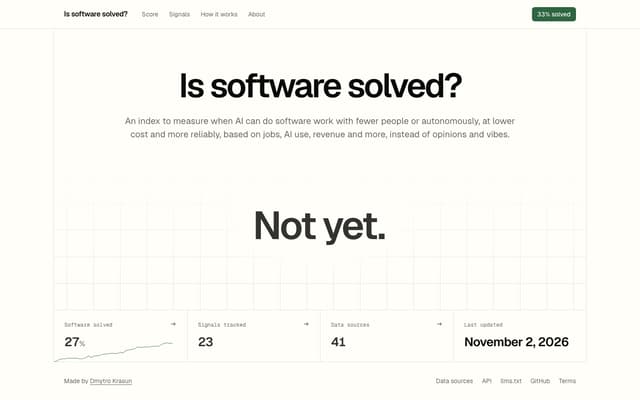
Is Software Solved?
A free public index that scores how close AI is to doing software work on its own, from 28 signals such as jobs, AI usage, revenue, security and outages.
Research Tool · Free
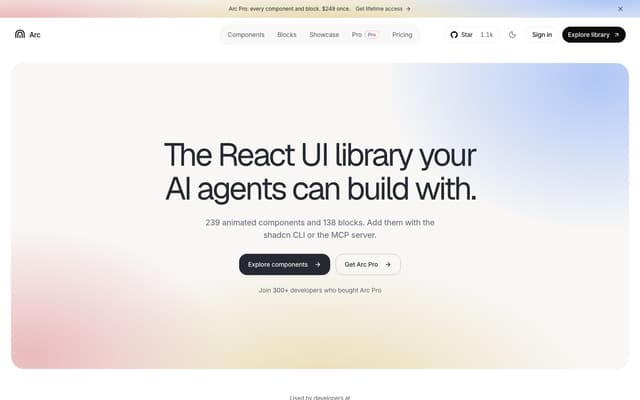
Arc UI
A library of 239 animated React components and 138 blocks for shadcn and Next.js, added with the shadcn CLI or by an AI agent through its MCP server.
AI Developer Tools · Freemium, from $149/year

Foundry AI
Foundry AI lets businesses build, evaluate, and improve AI agents for tasks like customer support and sales, with real-time feedback and continuous improvement for reliable outcomes.
AI Developer Tools